 WhatsApp Us


Competence-based qualification can open the door to new career opportunities. It helps in developing practical skills and improve employability.
Learners need to understand the requirements to enrol in a course. As per the requirements of a competence-based course, completing assignments alone is not enough to achieve the qualification. It is mandatory to gain experience in a real workplace.
Key Takeaways
· Online learning does not always mean you can complete the qualification online, and why workplace experience is often the key to achieving your certificate.
· There is a difference between work placements and employment, in terms of practical evidence.
· You can explore various options if you do not have a placement yet, including employer support, training provider assistance, and expert advice to help you complete your qualification successfully.
One of the biggest misconceptions is that if a course is delivered online, it can also be completed entirely online. While you can usually study the theory online and get proper tutor support, competence-based qualifications are designed to assess what you can actually do in a real working environment.
This blog will provide you with detailed information regarding competence-based qualifications.
What Is a Competence-Based Qualification?
A competence-based qualification is a vocational qualification that measures your ability to perform the tasks required in a specific job role. It assesses how well your knowledge can be applied in a real working environment. These qualifications are designed to ensure that learners meet industry standards and can carry out their responsibilities safely, confidently, and effectively.
For example, someone studying a Supporting Teaching and Learning qualification should be able to support pupils in a classroom, communicate effectively with teachers & colleagues, and follow safeguarding procedures.

Why Workplace Experience is Essential for Competence-Based Qualifications?
Competence-based qualifications are designed to assess your ability to perform a job. To achieve the qualification, you must demonstrate that you can carry out actual job responsibilities safely, effectively, and consistently in a real working environment.
These qualifications are based on occupational standards. These standards outline the skills, knowledge, and behaviours expected in a particular profession.
During your assessment, you will be completing real workplace tasks while meeting these standards. You will build a portfolio of workplace evidence along with written assignments throughout your journey.
Assessors will be able to evaluate your performance through your portfolio of evidence and confirm that you are ready for the role.
By collecting evidence from real work activities, the qualification provides employers with confidence that you have the practical skills and experience needed to succeed in your chosen career.
Learn more about What Assessment in competence-based qualifications looks like.
Can You Successfully Complete a Competence-Based Qualification Without a Work Placement?
No, you cannot complete your competence-based qualification without a work placement. Workplace evidence is a mandatory part of the assessment, as competence-based qualifications are designed to assess your ability in a working environment.
Work Placement vs Employment: What's the Difference?
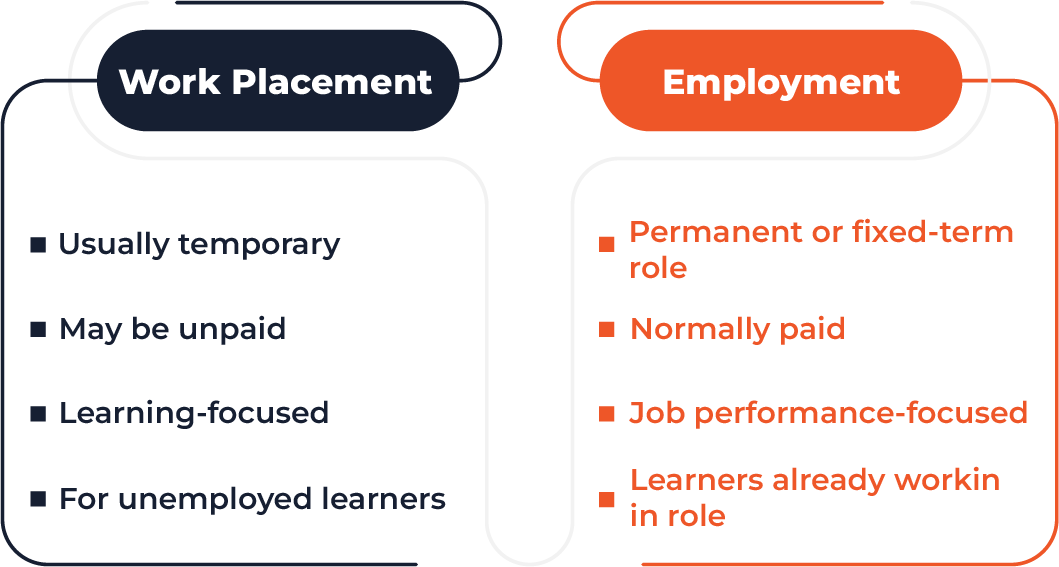
The terms work placement and employment are often used interchangeably, but they are not the same. Both can provide the practical experience needed for a competence-based qualification, but they differ in terms of purpose, duration, and payment.
Understanding the difference can help you decide which option is most suitable for completing your qualification.
[Infographic]
What Are Your Options If You Don't Have a Work Placement?
Not having a work placement means that you should plan carefully before enrolling. Taking the right steps early can save you time, money, and unnecessary delays.
Here are some options to consider if you don't currently have access to a suitable workplace.
Seek Employer Support
If you are already employed in a relevant sector, speak to your employer about your plans. They may be happy to support your qualification by allowing you to complete the required workplace activities. They can fill out the evidence form and perform assessments during your role. Your workplace will provide the practical experience and evidence needed to meet the qualification requirements.
Your Training Provider Can Help
Some training providers, such as Britannia School of Academics (BSA), provide work placements to help learners with their busy schedules. BSA is a pioneer in offering learners work placements to complete their competent qualification without any delay.
- Focus Awards Level 3 Certificate in Assessing Vocational Achievement
- Focus Awards Level 4 Certificate in Education and Training
- Focus Awards Level 5 Diploma in Teaching (FE and Skills)
Consider Delaying Your Enrolment
If you don't have access to a suitable workplace, delaying your enrolment may be the best option. Starting the course once you've secured employment or a work placement allows you to complete both the theoretical and practical elements without interruptions.
Speak to a Course Adviser
Before making any commitment, talk to a course adviser about your circumstances. They can explain if your chosen qualification requires workplace evidence, the type of placement, and whether your current situation meets the assessment requirements.
Getting professional advice beforehand will help you choose the right course and avoid unexpected challenges later in your learning journey.
Why Some Learners Misunderstand the Requirement of Work Placement?
Many learners enrol on competence-based qualifications without realising that workplace experience is a mandatory part of the assessment.
This misunderstanding often happens because of misconceptions about how these courses are delivered and assessed. Here are the most common reasons:
- Enrolling with an online training provider does not mean that you do not require work placement.
- Assessors need evidence that you can carry out actual job responsibilities, which cannot usually be gathered through written assignments alone.
- Some course advertisements focus heavily on the convenience and flexibility of online learning, while not clearly explaining the requirements until after enrolment.
- Reading the course requirements carefully before enrolling can help you avoid unexpected delays and disappointment.
- Learners who have worked in a similar role often believe their past experience will automatically meet the qualification requirements. Previous experience can provide valuable knowledge and confidence; most competence-based qualifications require current evidence of your skills.
- Awarding organisations usually expect assessors to observe your performance or review evidence collected during the assessment period.
- If you are no longer working in the relevant role, you may still need to secure a suitable work placement before you can complete the qualification.
Final Thoughts
A competence-based qualification is an excellent way to gain industry-recognised skills and progress in your career. Make sure you have access to a suitable workplace or discuss your options with your training provider before enrolling. Taking the time to plan ahead will help you complete your qualification without unnecessary delays.



.png)